
Dr. Higgs | Dr. Shumake
Dr. Higgs | Dr. Shumake
A root canal treatment is a dental procedure that removes infected or damaged pulp tissue from inside a tooth’s hollow chamber. The pulp consists of soft tissue containing nerves and blood vessels. This treatment saves the tooth by eliminating infection and preventing further damage.
This anatomical design of teeth is what makes toothaches so very painful. The hard structure of a tooth completely surrounds the pulp tissue, leaving no room for the pulp to increase in size. Soft tissue in other areas of the body can simply swell outward when inflamed or infected. When something causes infection or inflammation of the pulp, the pulp can only build in pressure within that hard chamber. This leads to sharp, shooting, or throbbing pains that are severe in intensity.
A root canal treatment stops toothaches by removing the inflamed or infected nerves and blood vessels from the affected tooth. It also cleans the internal surface of the hollow chamber, preventing any renewed infection from inside the tooth. After the dentist at Aquila Dental removes all of the soft tissue and cleans the hard tissue, he or she fills in the hollow chamber with a biocompatible filling material to seal the tooth from any future bacterial contamination.
Many people shorten the official term “root canal treatment” to simply a “root canal”. The reason for this name is the anatomical terms we use to describe teeth. The hollow space in the tooth extends down each root in a narrow form, called the root canal. Because some teeth have more than one root, a root canal treatment may involve cleaning and sealing up to four canals.
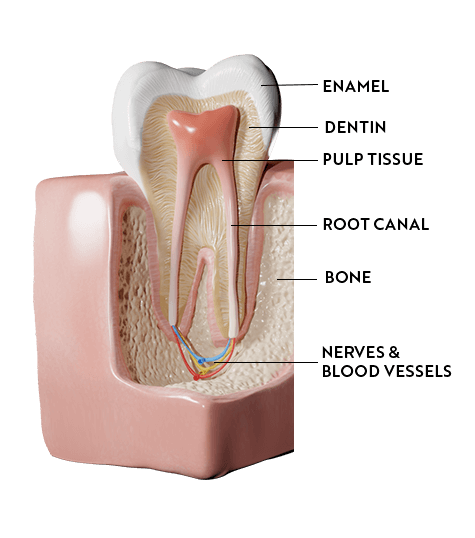
Root canal treatment uses local anesthesia to keep you comfortable while the dentist removes infected or inflamed tissue and seals the tooth against future contamination.
| Stage | What Happens | What You May Experience |
|---|---|---|
| Local Anesthesia |
The treatment area is numbed before the procedure begins. |
You may feel the initial anesthetic, but the tooth should remain numb during treatment. |
| Tooth Isolation |
A rubber dam is placed around the tooth to maintain a clean, dry working area and prevent saliva from reaching it. |
The rubber dam remains around the treated tooth while allowing you to breathe normally. |
| X-Ray Evaluation |
X-rays help the dentist evaluate the tooth’s root canals and monitor treatment progress. |
X-rays may be taken at different points during the procedure. |
| Canal Cleaning |
Small dental instruments remove the infected or inflamed pulp and clean and shape the canals inside the tooth. |
You may notice light pressure or pushing, but you should not feel pain. |
| Filling and Sealing |
The cleaned canals are filled with a biocompatible material and sealed to help prevent bacteria from reentering the tooth. |
A temporary or permanent filling may be placed, depending on the treatment plan. |
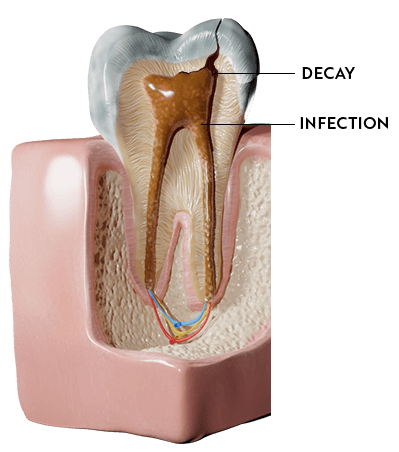
In many cases, your dentist will complete the root canal treatment by covering the sealed canal with a temporary filling. In other cases, the dentist may place a permanent filling and proceed immediately with the preparation for a crown. Because a root canal treatment removes the fluid supply from a tooth, the tooth is at a higher risk for cracks because it becomes brittle and dehydrated. Teeth with root canal treatment do require full coverage with a crown to prevent cracking in the future.
Immediately after the root canal treatment, it is normal to experience some tenderness or pain at the site of the dental work. Patients with infections around the affected teeth will likely receive prescriptions for oral antibiotics. It is important for you to follow the post-operative instructions from your Aquila Dental dentist for care and medications as closely as possible.
For more information on root canal therapy, read our blog on Why Is My Tooth Grey.
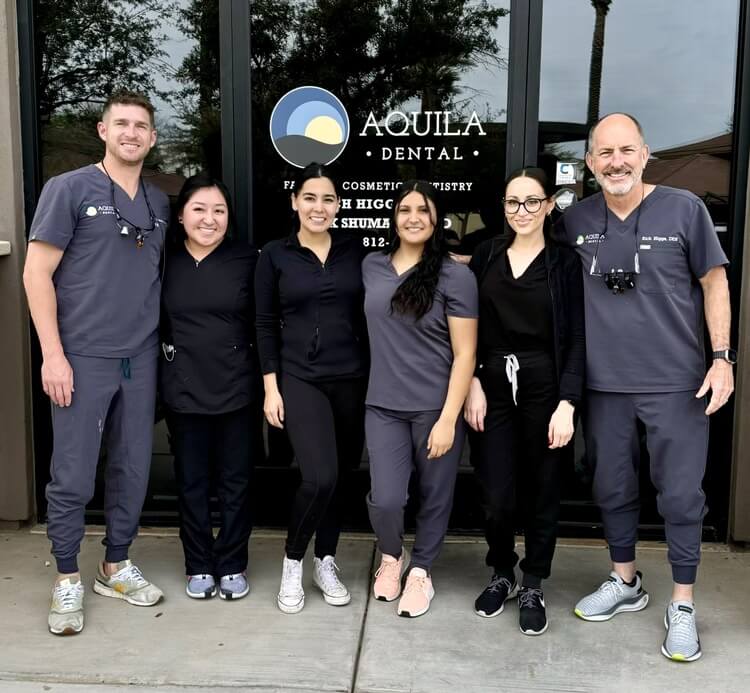

Our team has delivered outstanding dental care in Chandler, AZ for over 20 years. We are committed to providing our community with safe, gentle, high-quality dental care.
Should you have any questions or concerns regarding your dental care, we are more than happy to discuss how you can achieve a beautiful and healthy smile.
As a top dentist in Chandler, AZ, we have helped hundreds of families achieve their oral health goals and are eager to help you and your family do the same.