
Dr. Higgs | Dr. Shumake
Dr. Higgs | Dr. Shumake

Dental pain can result from many issues, including cavities, gum infections, cracked teeth, grinding, sinus infections, and mouth sores.
Dental pain is a broad term describing sensations of pain or discomfort with origins in the oral cavity. Most commonly, dental pain would describe a toothache, but there are also sources of pain in the mouth that do not specifically involve the teeth. Dental pain is common, so unless you and your dentist at Aquila Dental have already ruled out an infection as the source of your pain, you can assume your toothache is the result of a dental disease.
Toothaches vary widely in their severity. Some people experience a dull ache or discomfort, while others need to seek urgent care to control their unmanageable pain. It is important to understand that the source of your pain, not the severity, will determine the necessary treatment. We cannot assume that because a tooth only causes minor pain, the treatment will also be minor.
The first and most important step in eliminating dental pain is obtaining an accurate diagnosis of the cause. Here are a few of the potential causes of perceived dental pain:
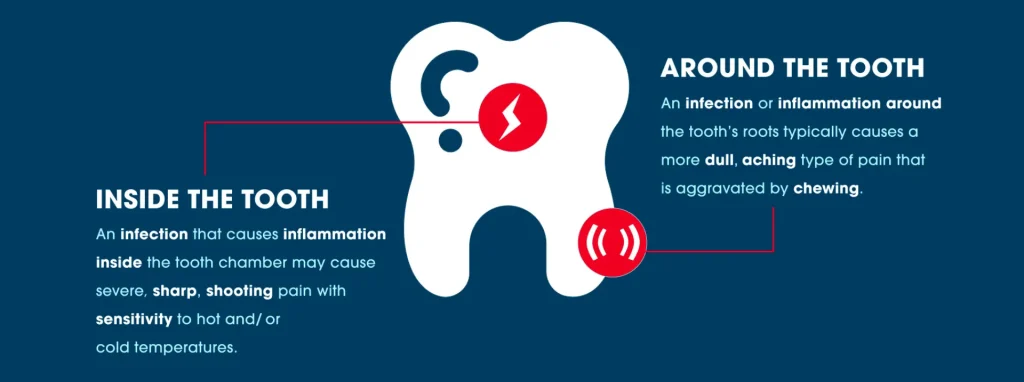
Sometimes, a dental infection that causes swelling does not lead to severe pain because there is no sudden increase in pressure. On the other hand, dental infections confined to the internal tooth chamber cause severe pain. This is because, rather than swelling outward, the increase in fluid due to inflammation simply builds up inside the tooth.
Rarely, some people experience dental pain from what is called “referred pain.” This is pain coming from nerves outside of the tooth structures that our brain interprets as tooth pain. This could be from the pinching of a nerve in the jaw joints or upper neck, infections in our sinuses, or sores in our mouth unrelated to the tooth structures. These atypical types of dental pain may also include burning or tingling sensations.
Because the severity of pain is not a great indicator of the severity of your dental problem, no toothache should ever be ignored. It is possible for a dangerous dental infection to cause only minimal pain. The best course of action when you notice dental pain is to schedule an appointment with your dentist at Aquila Dental for an evaluation right away.
In the meantime, there are some temporary ways you can attempt to relieve your pain at home.
What NOT to Do for a Toothache
You should never attempt to treat the source of your dental pain on your own. This includes attempts at extracting a tooth, filling a cavity (with anything besides an over-the-counter temporary medication), or draining a gum abscess. Anytime you put your hands or any type of “tool” in your mouth, you are introducing more bacteria and increasing the risk for infection.
Do not use large amounts of numbing cream, like Anbesol or Orajel, on a toothache. These gels contain a topical anesthetic and should only be used very sparingly. When used consistently over a long period of time, these numbing creams can actually damage your gum tissue and slow down any healing.
Any time you are experiencing dental pain you should see a dentist for an accurate diagnosis. If you experience any of these more serious symptoms, however, you should seek urgent care from your dentist or hospital immediately. Any rapid swelling of the lower face and jaw could result in airway constriction and risk of death.
All of these symptoms require urgent dental care.
You should also see your dentist as soon as you can when you experience pain that lasts for more than two days without changing, pain that does not respond to over-the-counter painkillers, or pain that is slowly worsening over time.
Dental problems like cavities, cracked teeth, and gum infections do not fix themselves, and will only get worse as time goes on. Cavities work their way toward the nerve inside the teeth, cracks spread vertically into the roots, and gum infections slowly destroy the bone around the teeth. You should never ignore the pain, hoping it will go away on its own. Even if the pain starts and then disappears, the dental problem is still present and has likely worsened to the point of nerve damage. It is always important to be seen by your dentist if you’re having or have recently had dental pain.
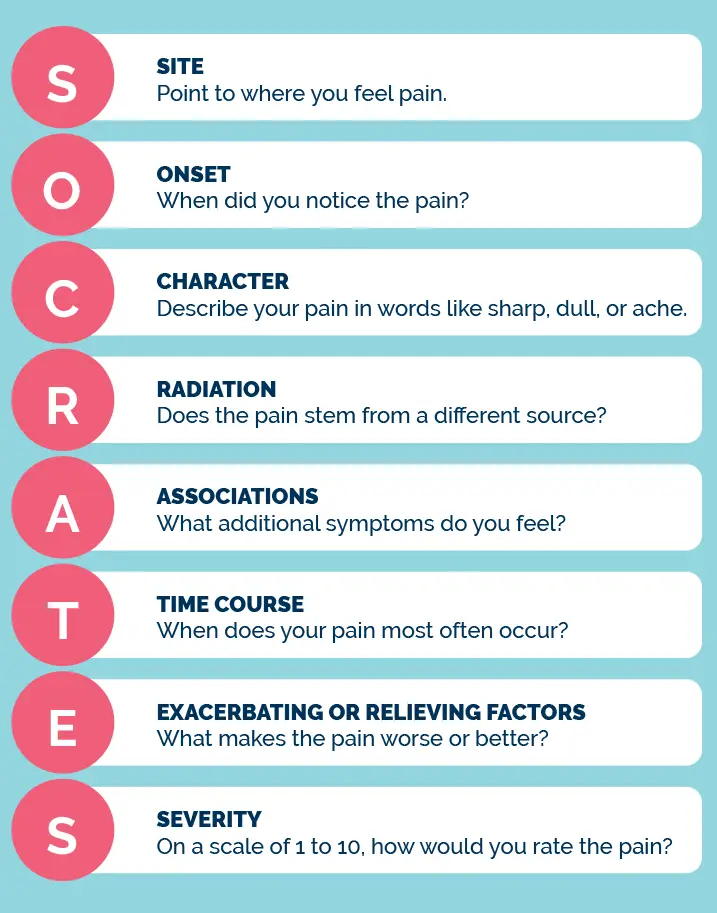
An accurate diagnosis is the first, and most important, step in dealing with dental pain. Your dentist at Aquila Dental will perform a thorough evaluation of your mouth and use the information gathered via dental x-rays and a series of questions to diagnose the cause of your pain. When assessing the source, your dentist will likely use a helpful mnemonic device called SOCRATES.
Close-up dental x-rays show the status of the teeth and surrounding tissues. If problems like cavities, dental abscesses or gum infections are present, they will be visible on x-rays. Your dentist may also perform diagnostic tests on your bite or cold sensitivity, to identify cracks in your teeth or establish the health of your pulp tissue inside your tooth.
It is important for you to communicate clearly and honestly with your dentist to ensure an accurate diagnosis and timely treatment.
Once your dentist has determined the underlying source of your pain, he or she will recommend dental procedures to treat and remove the cause of the problem. When the origin is a dental infection, you may need to take prescription antibiotics in conjunction with your dental treatment.
Your dentist can remedy large cavities that irritate the nerve inside the tooth by replacing the decayed tooth structure with a filling. A cracked tooth may be covered with a dental crown. When the nerve suffers irreversible damage or infection, your dentist must remove the dead nerve with a root canal treatment. In some cases, instead of removing the nerve, you may need to remove the tooth itself with an extraction.
The cause of the majority of dental pain is a dental problem that requires treatment. While you may be able to escape your pain by avoiding a tooth, ignoring the problem does not make it go away. In order to protect your health, it is important that you see a dentist for treatment of any dental pain.
Nervous about your next restorative care visit? Learn more about the services we offer.
Almost every dental problem is preventable!
You can prevent further toothaches by working closely with your dentist at Aquila Dental to maintain great oral health. This will involve eating a healthy diet, performing good oral hygiene at home, seeing your dentist and dental hygienist regularly for check-ups and professional cleanings, and taking any preventive actions your dentist recommends. People who clench or grind their teeth should wear a protective nightguard to prevent cracked teeth. Those with a high risk for developing new cavities should use prescription strength oral care products and undergo professional fluoride treatments with their cleanings.
It takes both you and your dentist working together on a consistent basis to stop dental problems from developing. While this does take some time and effort, regular preventative treatments save you the pain and expense of a toothache in the future!
If you or a loved one in Chandler, AZ is suffering from dental pain, do not put off your dental visit. Schedule an appointment for diagnosis and treatment at Aquila Dental today. If you do not currently see a dentist, we are here to help you develop a relationship with a caring dentist who can address your concerns and help you stay healthy for the rest of your life.